This week for technology in music education, we explored the massively popular subculture of electronic music (those who are more in tune with the kids will be able to help me understand it) and specifically breaking down some of the stereotypes that come with it. These stereotypes can include the belief that it is easy music to compose and manipulate, or that there is a lack of depth in it’s creative intentions, substituting creativity for lucrative decisions. In fact, understanding the processes and details that go into DAW reliant music making is one tough challenge, and there is indeed a spectrum of both commercial and abstract or artistic electronic music.
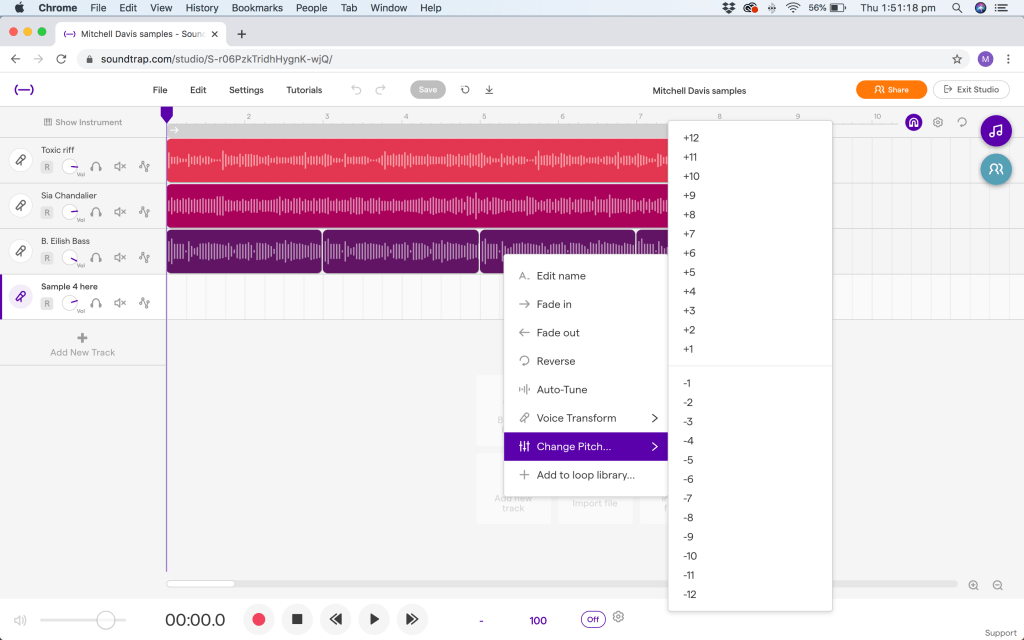
Without further ado, here are some screenshots of the challenges set to our class by James. First up, a sound trap exercise in combining several samples taken from hit pop songs, in whatever ways we could imagine. I managed to combine the bass line of a Billie Eilish song, the synth melody from a Britney Spears track and the chorus of a Sia track, manipulating the key/pitch and the tempo of each until they all matched as if they were composed for the same piece of music. While publicly hearing audio of this exercise may not be entirely legal, here is a screenshot of the process :
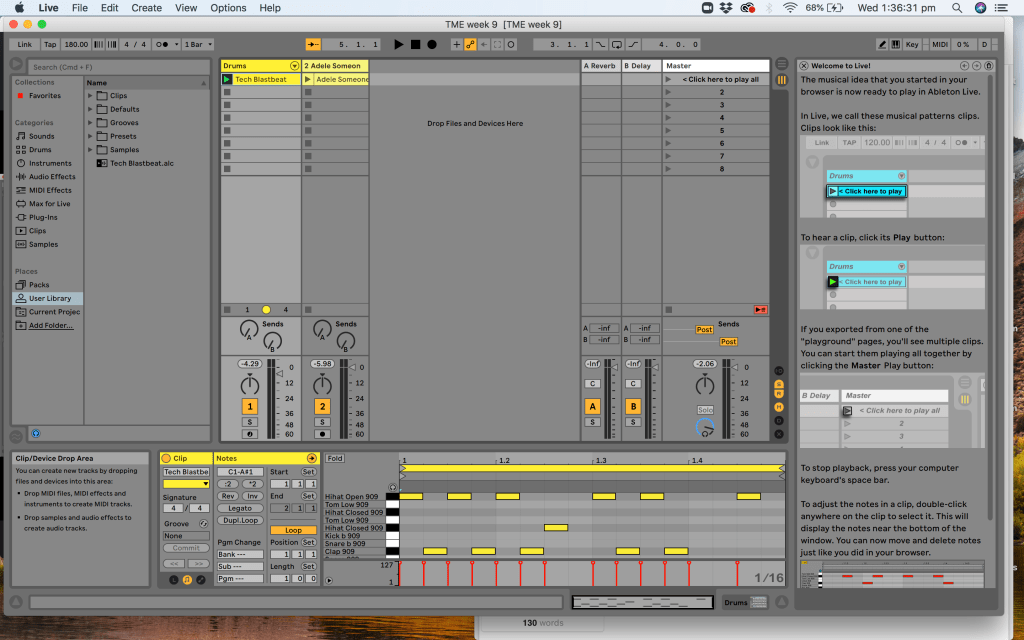
Next, an activity assigned to us in using Ableton live for a similar desired result, with the added audio manipulation abilities of ableton versus the limitations of sound trap. This exercise also included a drum beat designed from the ableton learning website, with the online and free drum loop designer. As a modern musician who plays rock, metal and blues, using a DAW such as Ableton with it’s many features actually proves to be more difficult than one such as sound trap :
In the same vein as this week’s lesson, here is a video by ‘boyinaband’, the youtube channel of a musician who is passionate about both analogue, live instrumental recorded metal music and digital electronic music. In this video, he takes a close look at the stereotypes placed on electronic musicians. It becomes clear that the knowledge and skillset required to understand and produce any form of electronic music that can entertain an audience or gain reputation as high art requires as much time and effort as that of learning an instrument.
Thank you for reading
Mitchell Davis

 Mitchell Davis Music Education Study Blog 2019-22